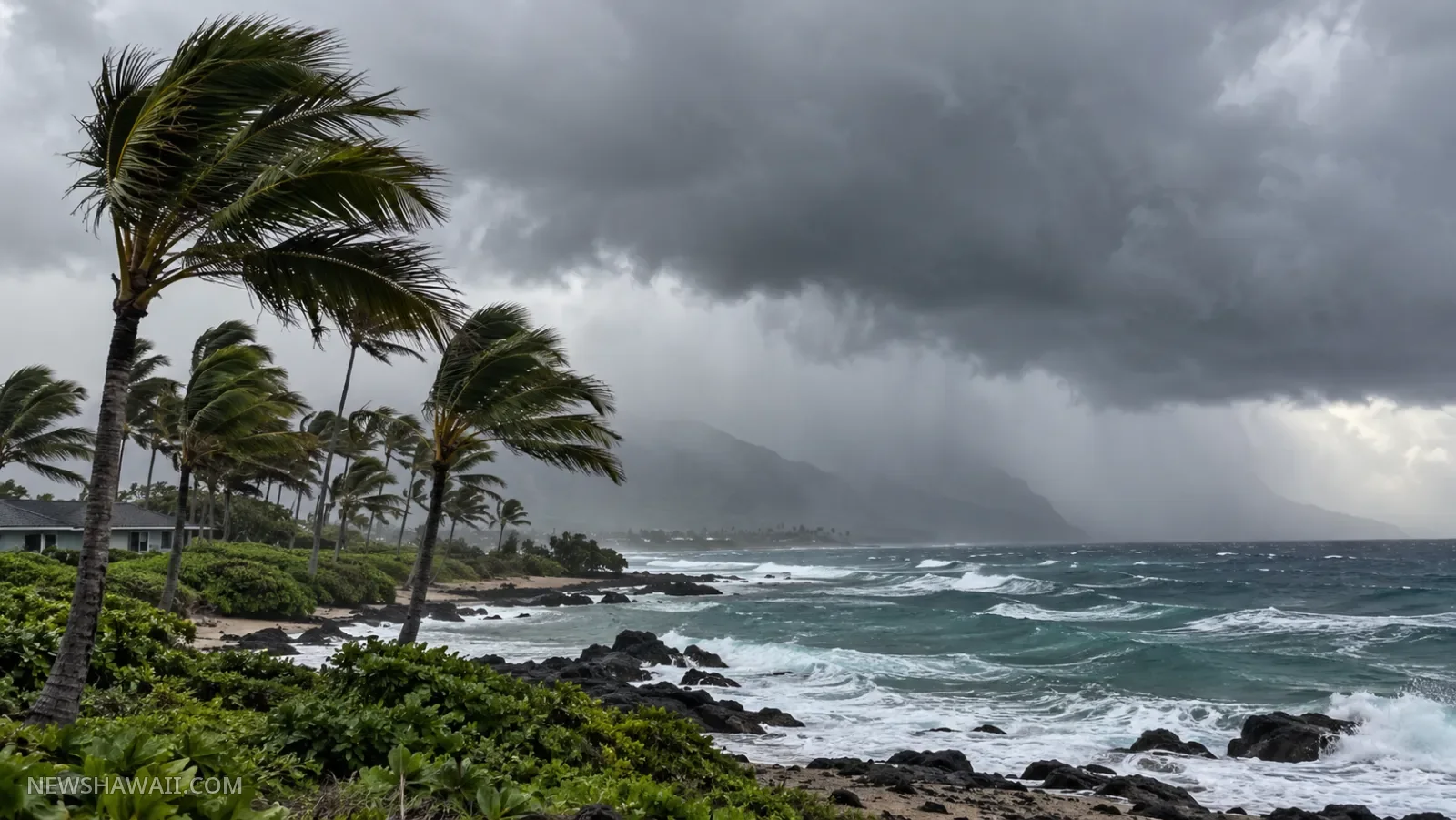
Kauaʻi’s final Lowell debris sweep set for Tuesday in Poʻipū
Kauaʻi County will hold its final Hurricane Lowell debris sweep in Poʻipū on Tuesday, Oct. 27, along Hoʻonā, Lāwaʻi, Alania and Amio roads. Residents should not place more debris in the county right-of-way after Monday.
The county’s hurricane resource centers closed Oct. 22. Residents can call 211 or visit kauairecovers.org for help. Seven debris sites are open islandwide with storm-debris tipping fees waived.
A $2 million state-funded program offers $5,000 or $10,000 grants to small businesses and nonprofits hurt by Lowell, first-come, first-served, with a workshop Thursday, Oct. 29, at 9 a.m. at the Kauaʻi War Memorial Exhibition Center. Private nonprofits have until Nov. 6 to request FEMA Public Assistance, and SBA disaster loan deadlines are Dec. 7 for physical damage.
KIUC has restored power to most of the island, with work continuing in Kōkeʻe and some isolated outages.
What to watch: Individuals and households are not covered by the federal major disaster declaration’s Public Assistance; call 211 for other help.
About 100 Punaluʻu condos still have no running water two months after Hurricane Lala. At a Public Utilities Commission hearing in Pāhala, residents described the conditions as untenable. A lawyer for Punaluʻu Water and Sanitation said repairs would cost about $500,000 that the company doesn’t have, and gave no timeline, the Hawaii Tribune-Herald reported. The company is in early talks with Hawaiʻi County about the system.
Nonprofits can apply for FEMA aid. Private nonprofits, including churches, that were damaged by Lala on Oʻahu, Hawaiʻi Island or Maui County, or by Lowell on Kauaʻi or Maui County, may qualify for FEMA Public Assistance. The deadline to request it is Nov. 6. For help, email dod.hiema.publicassistance@hawaii.gov.
What to do: Nonprofits should file before Nov. 6, even if repairs are still being estimated.
Kauaʻi’s Hurricane Lowell recovery continues. The $2 million Kauaʻi Hurricane Lowell Business Recovery Grant Program is offering one-time grants of $5,000 or $10,000 to eligible small businesses and nonprofits, first come, first served. Private nonprofits can request FEMA Public Assistance by Nov. 6, and SBA disaster loans have a Dec. 7 deadline for physical damage.
The state Department of Land and Natural Resources reopened the Waimea Canyon Lookout on Saturday during daylight hours. Kōkeʻe State Park, the rest of Waimea Canyon State Park and other Kauaʻi state parks remain closed. Kauaʻi Island Utility Cooperative has restored power to most of the island, with Kōkeʻe the main area still being worked on.
What it means: Residents with unmet needs can call 211 or visit kauairecovers.org.
An unusually busy season. NOAA predicted an above-normal Central Pacific season in May, tied to a developing El Niño. By mid-September the basin had already seen six named storms, four hurricanes and two major hurricanes, according to a Moody’s analysis, with two damaging close passes to Hawaiʻi. The season runs through Nov. 30.
Hurricane Nolo took an erratic turn toward Hawaiʻi Island, prompting a hurricane watch there and a tropical storm watch for Maui, with forecasts of more than a foot of rain in places. Shelters opened.
Lala lashed the islands without making landfall. Flooding on Hawaiʻi Island’s Hāmākua and Kaʻū coasts swept homes from their foundations, a section of Highway 11 at Pāhala washed out, and power lines were damaged on Hawaiʻi Island, Maui and Oʻahu. Authorities reported at least three deaths.
Get ready before a storm
- Central Pacific Hurricane Center: official forecasts and advisories.
- Hawaiʻi Emergency Management Agency: shelters, alerts and preparedness.
Earlier updates and background
- Iniki, 1992: A Category 4 hurricane hit Kauaʻi directly, the strongest to strike Hawaiʻi in modern records.
- Iwa, 1982: Battered Kauaʻi and Oʻahu.
- Lane, 2018: Record rain on Hawaiʻi Island; its winds also fanned fires on Maui.
- Dora, 2023: Passed far to the south, but its pressure gradient drove the winds behind the August 2023 Maui fires.
- 2015: The last strong El Niño year set Central Pacific activity records.