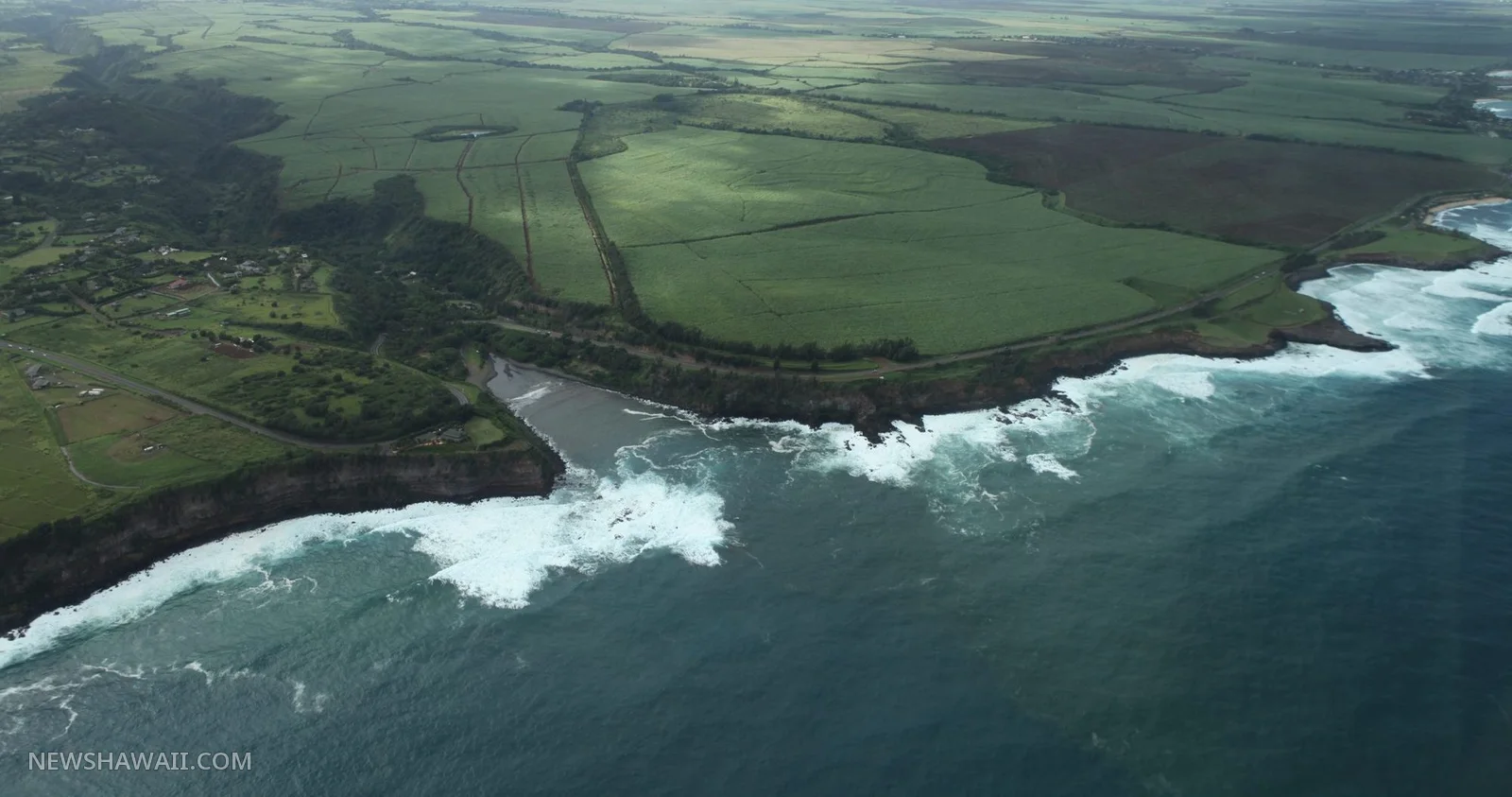
Hawaiʻi imports somewhere between 85 and 90 percent of its food. Every shipping delay, every storm and every price hike on the mainland lands on our grocery shelves. And yet for decades, some of the best-watered, most level farmland in these islands has been used for something we can’t eat: corn seed for mainland farms and test plots for the world’s biggest chemical companies.
That is the real story of GMOs in Hawaiʻi. It isn’t about whether a kernel of genetically engineered corn will hurt you if you eat it. It’s about who controls the seed, what gets sprayed to grow it, who gets hurt when the rules are broken, and how hard these companies have fought to keep residents from even knowing what is being sprayed next door.
The promise, and the treadmill
Genetically engineered crops now cover more than 90 percent of U.S. corn, soybean and cotton acres, according to the U.S. Department of Agriculture. The most widespread trait isn’t about nutrition or yield. It’s herbicide tolerance: crops engineered to survive being sprayed with weedkiller, most famously Monsanto’s Roundup, whose active ingredient is glyphosate.
The result was predictable. Global glyphosate use rose nearly fifteenfold after these crops arrived in 1996, according to a 2016 peer-reviewed study by agricultural economist Charles Benbrook. Weeds did what living things do and adapted. A 2018 scientific review counted 38 weed species that had evolved resistance to glyphosate; a more recent review puts the count at 62. When the weeds stop dying, farmers are sold stronger chemicals and new seeds engineered to tolerate them. It is a treadmill, and the companies selling both the seed and the spray profit at every step.
Even the National Academies of Sciences, which in 2016 found no evidence that genetically engineered foods are riskier to eat than conventional ones, called herbicide-resistant weeds a “major agricultural problem” in places where these crops are grown. Safe to eat and good for farming communities are not the same thing.
Four companies, fewer farmers
Just four corporations, Bayer (which bought Monsanto in 2018), Corteva, Syngenta and BASF, control about 56 percent of the world’s commercial seed market, by watchdog group ETC Group’s count of 2023 sales. Seed that once was saved from one harvest to plant the next is now patented, licensed and bought again every season, often bundled with the chemicals designed to go with it.
The farms that can afford that model get bigger. The ones that can’t disappear. The 2022 U.S. Census of Agriculture counted 1.9 million farms, the first time the number has fallen below 2 million since before the Civil War, and 7 percent fewer than just five years earlier. Farms with more than $5 million in sales are less than 1 percent of all farms but account for 42 percent of all sales. Monoculture, thousands of acres of the same crop, is the business model. The small diversified family farm, the kind Hawaiʻi needs most, is the casualty.
Hawaiʻi as the testing ground
Our year-round growing season made Hawaiʻi a prized location for seed companies, which can grow several generations of corn a year here. Their fields have stretched across Kauaʻi’s west side, Molokaʻi, Oʻahu’s central plain and Maui. Bayer still lists roughly 8,000 acres of farmable cropland in the state.
Those operations rely heavily on restricted use pesticides, chemicals considered dangerous enough that only certified applicators may use them. And the record of at least one company in handling them here is not a matter of opinion. It’s a matter of federal court records.
In 2019, Monsanto agreed to plead guilty to illegally spraying methyl parathion, a pesticide banned for that use, on corn seed and research crops at its Kīhei, Maui, facility in 2014. It paid $10 million in fines and community payments and entered a deferred prosecution agreement over illegally storing the banned chemical as hazardous waste.
It didn’t stop there. In January 2022, Monsanto pleaded guilty to 30 more federal crimes for sending workers back into Oʻahu fields in 2020 during the safety period after they had been sprayed with a glufosinate herbicide, and to two felonies for storing the banned pesticide from the earlier case on Maui and Molokaʻi. It paid another $12 million and was placed on three years of probation. The people put at risk were local workers. The fines were a rounding error for a global corporation.
When residents tried to protect themselves
Hawaiʻi’s people did not sit still. In 2013, the Kauaʻi County Council passed Bill 2491, requiring large users of restricted pesticides to disclose what they sprayed and to keep buffer zones from schools, homes and hospitals. Hawaiʻi County restricted new GMO crops. In 2014, Maui County voters approved a moratorium on GMO farming at the ballot box.
The seed companies sued, and they won. In November 2016, the federal Ninth Circuit Court of Appeals ruled that all three counties’ laws were preempted by state or federal law. Communities living closest to the fields were told they had no power to set their own rules.
The Legislature eventually acted. Act 45 of 2018 made Hawaiʻi the first state to ban chlorpyrifos, a pesticide linked to brain damage in children, starting in 2023. It requires annual reporting of restricted pesticide use and a 100-foot buffer around schools. But that buffer applies only during school hours, and the public sees only statewide totals, not where or when chemicals were sprayed. Advocates and some lawmakers have pushed to widen the buffers to half a mile, citing pesticide drift measured as far as 0.8 mile away.
Even the state’s own land agency looked away. In August 2025, the Hawaiʻi Supreme Court ruled that the Board of Land and Natural Resources should have required an environmental review before letting Syngenta run pesticide and GMO research on public land in Kekaha, Kauaʻi. By the time the court ruled, Syngenta had already left.
The cancer verdicts
In 2015, the World Health Organization’s International Agency for Research on Cancer classified glyphosate as “probably carcinogenic to humans.” The U.S. Environmental Protection Agency disagrees and says it is not likely to cause cancer. In several landmark trials, juries hearing the evidence in full sided with the people who got sick.
In 2018, a San Francisco jury awarded $289 million to Dewayne Johnson, a school groundskeeper with non-Hodgkin lymphoma who had sprayed Roundup for years; appeals courts cut it to about $20.5 million, but the verdict stood. A 2019 jury awarded Edwin Hardeman more than $80 million, later reduced to $25 million and upheld on appeal. A California couple, Alva and Alberta Pilliod, won a $2 billion verdict, later cut to about $87 million.
In 2020, Bayer agreed to pay up to $10.9 billion to settle roughly 100,000 claims. In February 2026 it proposed another $7.25 billion class settlement for current and future claims, and it has set aside around $16 billion in all. In June 2026, the U.S. Supreme Court handed Bayer a significant win, ruling 7-2 in Monsanto v. Durnell that federal pesticide law bars state claims that it failed to warn users of cancer risk. Tens of thousands of other claims, built on negligence and product defect, remain.
Companies don’t set aside $16 billion over a product they believe is harmless to the people using it.
What Hawaiʻi should do
We are not asking anyone to fear their corn. We are asking Hawaiʻi to stop letting its land, its water and its workers serve as a laboratory for companies with criminal records here.
- Tell people what’s being sprayed, where and when. Publish restricted pesticide use by location and date, in time for neighbors to act on it.
- Widen the buffers, and keep them in force around the clock, not just during school hours.
- Require environmental review before any pesticide-intensive operation runs on public land, as the Supreme Court has now said the law demands.
- Put public farmland in local hands. Every acre the seed companies give up should go to farmers growing food for Hawaiʻi, with affordable long-term leases and water.
- Back small and diversified farms with the same attention the state has given the seed industry for decades.
A state that imports nearly everything it eats can’t afford to hand its best farmland to chemical companies. It’s time to take it back.
This is an editorial and reflects the views of News Hawaii.
Sources
- USDA Economic Research Service: Adoption of genetically engineered crops
- Benbrook, “Trends in glyphosate herbicide use,” Environmental Sciences Europe (2016)
- Heap and Duke, “Overview of glyphosate-resistant weeds worldwide,” Pest Management Science (2018)
- “Thirty years of glyphosate-resistant crops and weeds,” review
- ETC Group, “Top 10 Agribusiness Giants” (2025)
- USDA NASS: 2022 Census of Agriculture release
- Bayer: Hawaii operations
- U.S. Department of Justice: Monsanto plea agreements
- Hawaii News Now: Monsanto pleads guilty to pesticide-related crimes (2022)
- Iowa State CALT: Ninth Circuit rulings on county GMO laws (2016)
- Hawaiʻi Department of Agriculture: Act 45 rules
- Hawaii News Now: Supreme Court ruling on Kekaha seed farm (2025)
- ABA Journal: Bayer’s $10.9 billion Roundup settlement
- CNBC: Supreme Court limits Roundup suits (2026)